Australia Student Visa Rejections Hit Record Highs: What Indian Applicants Must Know in 2026
16 Apr, 2026
Australia Student Visa Rejections Hit Record Highs: What Indian Applicants Must Know in 2026
With 1 in 3 student visa applications globally being refused and India facing a 40% rejection rate, applying without a strategy is now expensive and risky.
Australia's student visa rejection rate is rising: 1 in 3 students are refused, and India faces a 40% rejection rate. Applying without a strategy is risky and expensive.
Updated April 2026 · 8 min read · Study Abroad Guidance
Key Stats
- 67.6% Visa approval rate, lowest in 20+ years
- ~40% Rejection rate for Indian applicants
- 1 in 3 Students refused in February 2026
- 65% Rejection rate for Nepali students
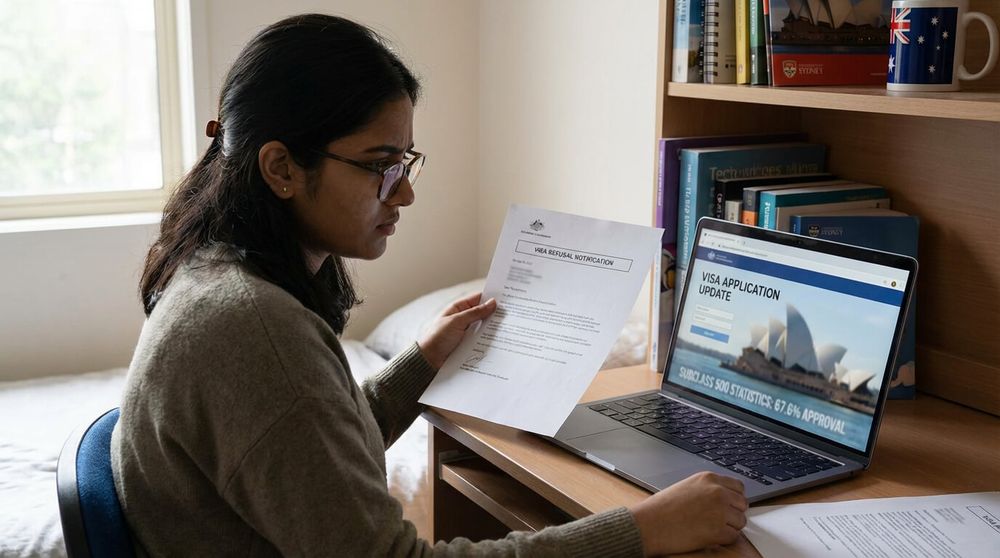
If you are an Indian student planning to study in Australia, you are navigating the most difficult visa environment in over two decades. Data from recent reports paints a sobering picture. Australia's student visa approval rate has dropped to just 67.6 percent, the lowest on record, and Indian applicants are bearing a disproportionate share of the rejections.
This shift means applicants must understand the new criteria, why it matters for their unique situations, and what steps to take next. Let's look at the data driving these changes.
Key finding (2026): Australia recorded its highest-ever student visa refusal rate in early 2026, with India at around 40 percent and Nepal up to 65 percent among the most affected.
Why Australia Is Refusing More Student Visas
Australia has introduced stricter scrutiny under the genuine student requirement, which assesses whether applicants are pursuing education for legitimate academic and career goals rather than primarily for work or migration pathways.
Several factors are driving higher rejection rates:
- Weak Statement of Purpose (SOP): Generic or unclear career goals
- Course-career mismatch: No logical connection to past education or work
- Poor institution choice: Higher scrutiny on private or lesser-known colleges
- Financial inconsistencies: Unclear or insufficient funding proof
- Application errors: Even small mistakes can lead to refusal
Country-by-Country Rejection Snapshot
| Nepal | Up to 65% | Very High |
| India | Around 40% | High |
| Global Average | Around 32.4% | Elevated |
For Indian students, rejection rates have risen sharply compared to pre-2023 levels. This is due to both increased demand and a policy shift toward selecting high-quality, long-term candidates.
The True Cost of a Rejected Application
A visa rejection is not just a setback: it's a significant financial and strategic loss, costing ₹50,000–₹2,00,000 or more, delaying academic plans and affecting future applications.
- ₹50,000 to ₹2,00,000 or more in fees lost
- 6 to 12 months delay in academic plans
- Negative impact on future visa applications
- Long-term effect on immigration history
Beyond money, it disrupts your career timeline, admission cycles, and overall momentum.
What a Strong Application Looks Like
Despite higher rejection rates, thousands of Indian students still get approved each month. Successful applications are strategic, not lucky.
Here is what matters:
- Clear, personalised SOP: A strong, believable academic and career story
- Logical course progression: Alignment with your background
- Smart university selection: Established public universities reduce risk
- Strong financial proof: Transparent, well-documented funds
- Ties to home country: Evidence of intent to return
Important insight: Institution choice significantly impacts visa outcomes. The same applicant can face very different results depending on where they apply.
Why Australia Is Still Worth It
Despite stricter policies, Australia remains one of the top study destinations globally:
- Six universities in the global top 100
- Post-study work visas are up to 4 to 6 years.
- Clear pathways to skilled migration
- High-quality education and global recognition
The issue is not the destination. It is the preparation.
How Profile Evaluation Changes Outcomes
A proper pre-application evaluation can significantly improve your chances by assessing:
- Academic alignment with course options
- Financial readiness and documentation
- Institutional risk levels
- Strength of career narrative
Most rejections are preventable with the right guidance before submission. Once a refusal is on record, the path forward becomes harder and more expensive.
Get Your Profile Evaluated Before You Apply
Avoid costly mistakes with a professional pre-application assessment.
- Review of academics, finances, and SOP
- Institution and course guidance
- Risk evaluation before submission
📞 Call: +91 90376 62324