Is Physiotherapy Worth Studying in Australia in 2027?
10 Jan, 2026
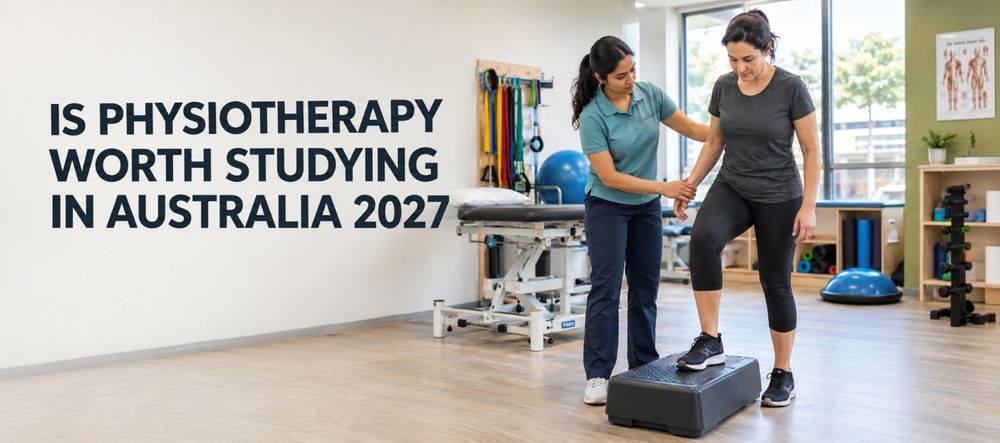
For students interested in healthcare but drawn more towards movement, fitness, sports injuries and rehabilitation, physiotherapy is a career worth exploring.
Australia has become a popular destination for international students considering physiotherapy, thanks to its practical training approach, established healthcare system and range of career opportunities. The UK and New Zealand are also attractive options, but Australia stands out for students who want a combination of academic learning and extensive clinical experience.
Still, before choosing a physiotherapy course in Australia for 2027, there are a few important things to understand. The degree requires serious academic effort, clinical placements can be demanding, and graduating does not automatically guarantee a job or permanent residency.
Here’s what prospective students should know before making their decision.
What Does a Physiotherapist Actually Do?
Physiotherapy is often misunderstood as a profession mainly involving massages, stretching and exercise sessions. These treatments can form part of physiotherapy, but the actual scope of practice goes much further.
Physiotherapists help people regain movement, manage pain and improve physical function following injuries, illnesses, surgeries or long-term health conditions.
Consider someone recovering from a serious road accident. Returning to normal activities may require months of rehabilitation, strength training and movement assessments. A physiotherapist helps develop and adjust that recovery plan.
The profession covers several areas, including:
- Sports injuries and athletic rehabilitation
- Musculoskeletal conditions and chronic back pain
- Stroke and neurological rehabilitation
- Post-surgical recovery
- Cardiovascular and respiratory rehabilitation
- Paediatric physiotherapy
- Mobility problems affecting older adults
- Workplace injuries and occupational rehabilitation
- Rehabilitation following intensive care
Physiotherapists also assess patients, develop treatment plans, monitor recovery and work alongside doctors, nurses, occupational therapists and other healthcare professionals.
In Australia, physiotherapists have considerable clinical responsibility. Depending on the circumstances, patients may consult a physiotherapist directly without first obtaining a referral from a doctor.
Why Study Physiotherapy in Australia?
One of the strongest reasons to study physiotherapy in Australia is the emphasis on practical education.
Students are not expected to learn clinical techniques entirely from textbooks. Physiotherapy degrees combine classroom teaching, laboratory sessions, supervised placements and opportunities to work with patients in healthcare environments.
Australian physiotherapy programs are accredited through the Australian Physiotherapy Council (APC), with approved programs recognised by the Physiotherapy Board of Australia.
This system helps maintain educational standards and ensures that graduates develop the professional competencies required for physiotherapy practice.
For international students, this practical approach can be particularly valuable. Working with patients from different backgrounds helps develop communication skills, clinical judgement and confidence in unfamiliar healthcare situations.
Australia also offers a variety of healthcare settings in which physiotherapists can build their careers, from major public hospitals to small community rehabilitation clinics.
Physiotherapy Course Structure in Australia
Students researching physiotherapy courses in Australia will generally come across undergraduate degrees, graduate-entry master’s programs and professional doctorate pathways.
The course structure depends on the university and qualification.
Bachelor of Physiotherapy
A Bachelor of Physiotherapy in Australia generally takes four years to complete.
The earlier stages of the degree focus on building scientific knowledge. Students study subjects such as human anatomy, physiology, biomechanics, neuroscience, exercise science and human movement.
Anatomy, in particular, requires considerable attention. Understanding how muscles, joints, nerves and other body systems function is essential before students can confidently assess patients and plan treatments.
As the course progresses, students move into more specialised areas of physiotherapy.
These may include musculoskeletal physiotherapy, neurological rehabilitation, sports physiotherapy, cardiorespiratory physiotherapy and community rehabilitation.
Clinical training becomes increasingly important in the later stages of the degree, although some universities introduce practical exposure earlier.
Master of Physiotherapy
A Master of Physiotherapy can be an alternative for students who already hold a relevant undergraduate qualification.
Graduate-entry programs commonly take around two years, although program lengths and entry requirements differ between universities.
Students with backgrounds in health science, exercise science or biomedical science may be eligible to apply, provided they meet the academic and prerequisite subject requirements.
Importantly, not every master’s degree with ‘physiotherapy’ in its title leads to professional registration.
Students should distinguish between an entry-to-practice physiotherapy qualification and an advanced or research-based program designed for existing physiotherapists.
Before applying, confirm whether the specific qualification is approved as an entry-to-practice program in Australia.
Which route should international students choose?
Factor | Bachelor’s degree | Graduate-entry master’s |
|---|---|---|
Suitable for | Eligible school leavers | Applicants with a relevant prior degree |
Typical duration | Around four years | Around two years for some programs |
Main consideration | Year 12 prerequisites and academic results | Prior degree, prerequisite subjects and academic results |
Budget planning | Tuition and living costs over a longer period | Potentially shorter study period, but annual fees may be higher |
Professional outcome | Depends on the specific approved program | Depends on the specific approved program |
The right option depends on your existing qualifications, budget, academic background and preferred university. Do not select a master’s program solely because it is shorter. Students still deciding between clinical fields can also compare physiotherapy with other health sciences courses abroad before choosing a route.
Physiotherapy Entry Requirements in Australia
Entry requirements vary by university and qualification. Meeting the minimum published criteria does not always guarantee admission, particularly when a course has limited places.
Academic requirements
For undergraduate admission, universities may assess:
- Class 12 or equivalent academic results
- Required science subjects
- English language proficiency
- Course-specific prerequisites
- Any additional selection criteria stated by the institution
For graduate-entry admission, applicants may need a recognised bachelor’s degree, specified prerequisite subjects and a competitive grade average. Applicants from India should check whether their Class 12 subjects meet the university’s prerequisites, because some programs require specific science subjects.
Physiotherapy IELTS requirements in Australia
English proficiency is especially important because physiotherapists must understand patient histories, explain exercises, communicate risks and document clinical decisions.
Some universities may require an IELTS Academic score around 7.0 or specify minimum scores for individual components. However, requirements differ by course and institution.
Professional registration has a separate English language standard. The Physiotherapy Board of Australia publishes the applicable registration requirements, which may include IELTS Academic scores of at least 7.0 in each component or an accepted alternative, subject to the current standard and any applicable provisions. This is a registration requirement, not a universal admission rule for every student. Check the official standard before planning your test.
Students who need to lift their band scores can prepare with IELTS and PTE coaching well before the application deadline.
Clinical Placements: An Important Part of Physiotherapy Education
Clinical placement is one of the most valuable and challenging parts of studying physiotherapy abroad.
During placements, students move beyond simulated assessments and begin applying their knowledge in supervised clinical environments.
Depending on the university and available placement arrangements, students may receive training in hospitals, rehabilitation centres, community clinics, aged-care facilities, private practices and sports-related settings.
Some Australian physiotherapy programs include hundreds of hours of supervised clinical education. The exact placement requirements vary by university and course.
Before beginning placement, students may also need to complete several compliance requirements. These can include vaccination records, police checks, first-aid certification and mandatory healthcare training modules.
Placements require more than technical knowledge. Students must communicate with patients, maintain professional behaviour, respond to clinical feedback and make appropriate decisions under supervision.
This is why choosing physiotherapy purely as an easy route into healthcare can be a mistake.
The academic workload is substantial, and practical assessments demand consistent preparation.
How can students prepare for clinical placements?
- Maintain organised records of vaccination and health documentation.
- Complete required background checks well before placement deadlines.
- Practise professional English and patient communication.
- Develop clear clinical note-taking and time-management habits.
- Budget for travel, accommodation, uniforms and other placement-related expenses.
- Ask whether placements may be located outside the university’s main city.
The APC does not set one universal number of clinical placement hours for every program, so figures such as 800 or 950 hours should not be treated as a fixed requirement for every university. Placement blocks can also limit the time available for paid work, so do not assume casual employment will cover all living expenses.
Best Universities to Study Physiotherapy in Australia
Australia offers several universities with accredited physiotherapy programs.
Examples include:
- Griffith University
- Monash University
- The University of Queensland
- The University of Sydney
- James Cook University
- Flinders University
- University of Canberra
- University of Newcastle
- RMIT University
These institutions offer different undergraduate, graduate-entry or other professional physiotherapy pathways.
However, the availability of a particular course, the campus offering it, tuition fees and admission requirements can change.
Students planning for the 2027 intake should check the university’s current course information rather than assuming that every program is available at every campus.
A university’s overall international ranking should not be the only deciding factor.
Clinical placement arrangements, practical facilities, course accreditation, location, living expenses and graduate outcomes may matter much more to an individual student.
The Australian Physiotherapy Council maintains a list of accredited programs that students can use when comparing their options.
More universities to check
Three more universities offer physiotherapy study options that are worth adding to your shortlist.
University | Program examples or study options |
|---|---|
Victoria University | Graduate-entry physiotherapy options |
University of South Australia | Physiotherapy undergraduate and graduate-entry options |
La Trobe University | Physiotherapy undergraduate and graduate-entry options |
Program names and availability can change, so confirm each option against the APC directory. Several universities above, including Monash, Queensland and Sydney, belong to the Group of Eight (Go8) universities in Australia, and students from Kerala can see more course-level comparisons in our list of the best Australian universities for international students from Kerala. The best Australia education consultants in Kerala can also help match a program to your marks and budget.
How to Choose the Right Physiotherapy University
Finding a well-ranked university is useful, but it doesn’t necessarily mean that university will be the best fit.
Students should pay attention to the type of clinical experience included in the course.
A university offering early clinical exposure may appeal to students who prefer learning through practice. Others may prioritise specialised rehabilitation facilities, research opportunities or access to particular healthcare networks.
Location is another consideration.
Studying in a major city can provide access to large healthcare institutions, while regional locations may offer a different lifestyle and potentially lower living expenses.
Students interested in sports physiotherapy may also consider universities with strong sports science departments, although sports science rankings alone do not establish the quality of a physiotherapy qualification.
For anyone planning to study physiotherapy in Australia in 2027, course accreditation should remain the first thing to verify.
Five checks before you pay a deposit
The Australian Physiotherapy Council is the accreditation authority for entry-level physiotherapy programs. The Physiotherapy Board of Australia decides which programs are approved for registration, and Ahpra runs the national registration system. A related healthcare degree is not necessarily enough for registration as a physiotherapist, so work through these steps first:
- Find the exact course on the university’s official website.
- Check the APC’s current accredited-program information.
- Confirm that the qualification is listed as an approved program by the Physiotherapy Board of Australia.
- Check the approval status and relevant dates for your intended intake.
- Ask the university about the program’s clinical placements, completion requirements and registration pathway.
Physiotherapy Course Fees in Australia
Tuition fees are one of the biggest considerations for international students. The total cost depends on the university, qualification, course duration and annual fee changes.
Rather than relying on a single national average, obtain the official international tuition fee schedule for your intended intake. Compare the full course cost, not just the first year’s fee. A university with a lower advertised fee may not be the cheapest overall if accommodation, transport or placement-related expenses are substantially higher.
Your budget should account for:
Expense | What to check |
|---|---|
Tuition | Fees for every year or teaching period |
Accommodation | Rent, utilities and any bond |
Food and transport | Regular living costs and travel to placements |
Overseas Student Health Cover (OSHC) | Required health insurance for the relevant student visa period |
Clinical placement expenses | Travel, accommodation, uniforms and compliance checks |
Study materials | Textbooks, equipment and required learning resources |
Visa and application costs | Current application charges, health examinations and document costs where applicable |
Emergency savings | Unexpected expenses or periods when casual work is unavailable |
Practical budgeting tip: Ask the university for a written estimate of the full program cost and prepare a separate monthly living budget. Do not rely on a part-time job to cover tuition or essential living expenses unless you have a realistic financial backup.
Physiotherapist Salary in Australia
Salary is naturally one of the biggest questions students have when considering physiotherapy as a career.
Australia offers competitive earning opportunities for qualified physiotherapists, although actual income depends on experience, workplace, location and employment arrangements.
According to the Australian Physiotherapy Association’s 2025 Workforce Census, the median annual salary reported by physiotherapists was approximately AUD 96,000.
The same report recorded an average annual salary of around AUD 102,000.
These are workforce figures, not guaranteed starting salaries for newly qualified graduates.
Physiotherapists may work in public hospitals, private clinics, rehabilitation centres, community healthcare organisations or specialised sports facilities.
Income can also differ between full-time employment, part-time positions and private practice.
Some workplaces offer additional compensation for weekend or public holiday shifts, depending on the applicable employment agreement.
Another salary reference point
Jobs and Skills Australia’s published occupational data reported median full-time earnings of approximately AUD 1,888 per week before tax, based on May 2025 earnings data. That works out to roughly AUD 98,176 a year if multiplied by 52 weeks, but it is a statistical benchmark rather than a starting salary. The APA census and this figure use different data sources and methods, so treat them as separate reference points rather than interchangeable measures.
What influences a physiotherapist’s salary?
- Experience: New graduates and experienced clinicians generally have different earning potential.
- Workplace: Public hospitals, private clinics, community health services and other employers may offer different packages.
- Specialisation: Advanced clinical skills and additional responsibilities can influence career progression.
- Location: Pay and employment opportunities differ between states, territories and regional areas.
- Employment arrangement: Full-time, part-time, contract and private-practice roles may have different pay structures.
Work-Life Balance for Physiotherapists in Australia
Physiotherapy can offer a satisfying balance between professional responsibility and personal life, but the experience varies considerably by workplace.
Hospital-based physiotherapists may work shifts or weekends, particularly in services that require ongoing patient care.
Private practice physiotherapists may have more predictable appointment schedules, although evening or weekend consultations are also common.
For many people, the appeal of physiotherapy comes from the nature of the work itself.
Helping someone regain the ability to walk after surgery, return to sport after an injury or manage a long-term mobility condition can provide a strong sense of professional purpose.
At the same time, physiotherapy is physically active work. Practitioners may spend long periods standing, assisting patients and carrying out assessments.
It’s important to consider these everyday responsibilities when assessing whether the profession suits your interests and abilities.
Career Opportunities After Studying Physiotherapy in Australia
A physiotherapy degree can lead to employment across a wide range of healthcare environments.
Qualified physiotherapists may pursue opportunities in public and private hospitals, sports rehabilitation, aged care, community health, neurological rehabilitation and musculoskeletal clinics.
With additional experience and training, some professionals move into specialist clinical areas, leadership, teaching, research or private practice ownership.
Sports physiotherapy is particularly appealing to students interested in athletic performance, injury prevention and rehabilitation.
However, specialist sports roles can be competitive and may require further professional development.
For students researching physiotherapy jobs in Australia, it is useful to examine employment opportunities in several sectors rather than concentrating exclusively on elite sports organisations or major hospitals.
Physiotherapy Registration Requirements in Australia
Completing a physiotherapy degree does not automatically authorise someone to practise as a registered physiotherapist.
Graduates must obtain registration through the Australian Health Practitioner Regulation Agency (Ahpra) under the Physiotherapy Board of Australia.
Graduates of approved Australian entry-to-practice programs have the relevant qualification for registration, but must still apply and satisfy the applicable registration requirements.
English language proficiency is an important part of this process.
Ahpra accepts specified English tests, including IELTS Academic, PTE Academic, OET and other approved assessments, with minimum requirements that depend on the test and relevant rules.
The registration requirements are separate from university admission requirements. Students should check both before enrolling.
This distinction is particularly important for international students whose long-term plans involve practising professionally in Australia.
Can International Students Work After Studying Physiotherapy in Australia?
Eligible graduates may be able to apply for Australia’s Temporary Graduate visa (subclass 485), which can provide a period of temporary residence and work after completing an eligible qualification.
However, eligibility depends on the applicable visa stream and current rules, including the qualification, age, previous visa history, Australian study requirements, English language evidence and other criteria.
As of the information published by Australia’s Department of Home Affairs, the Post-Higher Education Work stream generally provides two years for eligible bachelor’s degrees and coursework master’s degrees, with different periods for some other qualifications. Indian nationals may be eligible for different periods under the Australia–India Economic Cooperation and Trade Agreement, subject to the applicable rules. A relevant master’s degree may qualify for three years under that arrangement, but this must be confirmed against the current official requirements. Read the official Temporary Graduate visa guidance before making decisions.
Keep these distinctions in mind:
- A university offer does not guarantee a student visa.
- Completing a degree does not automatically grant a graduate visa.
- A graduate visa does not guarantee a physiotherapy job.
- Professional registration and immigration eligibility are separate matters.
Plan your study and finances around the rules that apply to your own circumstances rather than assuming a particular period of post-study work rights.
Can Physiotherapy Lead to PR in Australia?
Permanent residency is another major consideration for international students exploring healthcare courses.
Physiotherapist is included in Australia’s skilled occupation arrangements and may be relevant to certain skilled migration and employer-sponsored visa pathways.
However, studying physiotherapy in Australia does not automatically lead to permanent residency.
Eligibility depends on the visa pathway and may involve factors such as age, English language proficiency, skills assessment, points, employment, state or territory nomination and current immigration policies.
For this reason, the physiotherapy PR pathway in Australia should be treated as a potential opportunity rather than a guaranteed outcome.
Students should choose the course because it fits their academic ability and career interests, while separately evaluating their future migration options.
How to check your PR options
Do not choose a university because someone claims its location offers an easy route to permanent residency. Regional study or employment may be relevant to certain visa options, but eligibility depends on the specific visa criteria and your circumstances. For reliable information:
- Check the current skilled occupation and visa requirements on the Department of Home Affairs website.
- Confirm any relevant physiotherapy skills assessment requirements with the appropriate assessing authority.
- Check state or territory nomination criteria if considering a state-nominated visa.
- Consult a registered migration agent about your individual case, for example through Australia migration support.
Occupation lists and visa settings change often, so check the latest Australia core skills occupation list 2026 and our overview of Australia PR pathways in 2026 alongside the official sources. Treat migration as a possibility to investigate, not a guaranteed outcome of the degree.
Is Physiotherapy Difficult to Study?
Physiotherapy is not an easy healthcare degree, and students should understand the level of commitment involved.
Strong scientific knowledge is essential, particularly in subjects such as anatomy, physiology and biomechanics.
Clinical reasoning is equally important. A physiotherapist must understand a patient’s condition, assess physical limitations, choose appropriate interventions and evaluate whether treatment is working.
Communication skills also matter.
Students must learn how to explain treatment plans clearly, listen to patients and work with healthcare teams.
During clinical placements, professionalism, patient safety and practical competence are assessed alongside academic understanding.
For students who genuinely enjoy biology, movement science, rehabilitation and patient care, these challenges can make the course rewarding rather than discouraging.
Is Australia Better Than Other Countries for Physiotherapy?
Australia may be a strong option for students who value English-language clinical education, structured practical training and the opportunity to work in a range of healthcare settings. However, the best destination depends on individual priorities.
Factor | What to compare |
|---|---|
Education | Course content, approval status and clinical training |
Total cost | Tuition, living expenses and placement costs |
Language | Admission and professional registration requirements |
Career access | Local registration, graduate recruitment and work rights |
Long-term plans | Recognition of qualifications in the country where you want to practise |
Personal fit | Climate, location, support network and lifestyle |
If you plan to return to India or move to another country after graduation, check the professional registration and qualification-recognition rules there before enrolling. A qualification that supports registration in Australia does not automatically guarantee registration elsewhere.
How to Apply for Physiotherapy in Australia: A Step-by-Step Guide
A structured application process can help international students avoid preventable delays.
Step 1: Choose your entry route. Decide whether you need an undergraduate degree or a graduate-entry qualification based on your previous education.
Step 2: Shortlist universities. Compare prerequisites, tuition, location, clinical placements and program duration.
Step 3: Verify accreditation and approval. Confirm the exact course on the relevant official directories.
Step 4: Prepare your documents. These may include academic transcripts, certificates, passport details, English test results and any course-specific evidence.
Step 5: Submit your application. Follow the university’s deadlines and provide all requested information.
Step 6: Review your offer carefully. Check conditions, fees, deposit requirements, refund policies and the deadline for accepting the place.
Step 7: Plan your student visa application. Review the latest Department of Home Affairs requirements, health insurance arrangements and financial evidence requirements. The Australia student visa new rules in 2026 and the student visa assessment level update from October 2026 explain recent changes worth checking before you lodge.
Step 8: Prepare for clinical education. Arrange any required checks, vaccinations and training within the university’s deadlines.
Starting early gives you time to address missing prerequisites, arrange documents and compare costs without rushing into an unsuitable program. If you would like your profile checked against the universities above, you can book a free study abroad consultation.
Is Studying Physiotherapy in Australia Worth It in 2027?
Physiotherapy can be an excellent career choice for students who want to work in healthcare without following a traditional medicine or nursing pathway.
It offers opportunities to work with different age groups, treat a variety of conditions and develop specialised clinical skills over time.
Australia’s combination of structured education, supervised clinical training and diverse healthcare workplaces makes it a compelling study destination.
But the decision should be based on more than salary expectations or hopes of permanent residency.
Students need to consider tuition costs, admission requirements, clinical placements, professional registration and the realities of working in healthcare.
If your interests lie in human movement, sports rehabilitation, physical recovery and helping people improve their everyday lives, studying physiotherapy in Australia in 2027 may be a worthwhile investment in your future.
Frequently Asked Questions About Physiotherapy in Australia
1. Is physiotherapy in Australia worth studying in 2027?
It can be worthwhile for students who enjoy healthcare, meet the academic requirements and can manage the cost of study. The course provides practical clinical training and access to different career pathways, but employment, salary and migration outcomes are not guaranteed.
2. How many years does it take to study physiotherapy in Australia?
Many undergraduate physiotherapy degrees take around four years of full-time study. Some graduate-entry master's programs take around two years, depending on the university and course structure.
3. Can Indian students study physiotherapy in Australia after Class 12?
Yes, eligible Indian students can apply for undergraduate physiotherapy programs after Class 12. Admission depends on academic results, required science subjects, English proficiency and the university's selection criteria.
4. Is IELTS 7 required for physiotherapy in Australia?
Not necessarily for admission to every course. Some universities require an IELTS Academic score around 7.0, while others may have different requirements or accept specified alternatives. Professional registration has its own English language standard, so students should check both sets of requirements.
5. Are clinical placements compulsory for physiotherapy students?
Clinical education is an essential component of entry-level physiotherapy training. Students complete supervised learning in appropriate clinical settings, with the structure and total hours varying by program.
6. How much does it cost to study physiotherapy in Australia?
The total cost depends on the university, course length, annual tuition fees and living expenses. Students should calculate the complete program cost and include accommodation, insurance, transport and clinical placement expenses before accepting an offer.
7. What is the average physiotherapist salary in Australia?
Earnings vary by experience, location, employer and employment arrangement. Jobs and Skills Australia's published May 2025 data reported median full-time earnings of approximately AUD 1,888 per week before tax. This is a broad occupational benchmark, not a guaranteed graduate salary.
8. Can I work part-time while studying physiotherapy?
Eligible student visa holders may work subject to their visa conditions. However, clinical placements and practical assessments can involve demanding schedules. Students should ensure that part-time employment does not interfere with attendance or academic progress.
9. Can I get permanent residency after studying physiotherapy in Australia?
Possibly, depending on the immigration pathways available at the time and whether you meet their requirements. Completing a physiotherapy degree does not automatically lead to permanent residency. Check the current occupation, registration, skills assessment and visa criteria before relying on a particular pathway.
10. Does graduating from an Australian university automatically make me a registered physiotherapist?
No. Graduating from an approved entry-level program can satisfy the relevant education requirement, but you must still apply for registration and meet the other applicable requirements of the Physiotherapy Board of Australia.
11. Which university is best for physiotherapy in Australia?
There is no single best university for every applicant. Compare the exact course, professional approval status, admission requirements, clinical education, tuition and living costs. Choose a program that matches your qualifications and financial circumstances.
12. Is a master's degree better than a bachelor's degree in physiotherapy?
Neither is automatically better. A bachelor's degree is often appropriate for eligible school leavers, while a graduate-entry master's suits applicants who already have the required prior degree and prerequisite subjects. Both routes must be evaluated according to the specific program and its professional approval status.
13. Is physiotherapy a recession-proof career?
No profession is completely recession-proof. Physiotherapy serves important healthcare needs, but recruitment, salaries, funding and job availability can still change with economic conditions and employer demand. Students should consider the profession's long-term value without assuming guaranteed employment.
14. Can I study physiotherapy in Australia and later practise in India?
Potentially, but you should confirm the applicable Indian qualification-recognition and registration requirements before enrolling. Approval to practise in Australia does not automatically guarantee permission to practise in another country.
Planning to Study Physiotherapy in Australia?
Choosing between a Bachelor of Physiotherapy, a graduate-entry master’s program, and different university options can be confusing, especially when accreditation and admission requirements vary.
Planning to build a career in physiotherapy in Australia? Make an informed choice with Hola World. From selecting the right university to understanding admission requirements and available study pathways, our team can help you find a course that matches your academic background and career goals. Explore your physiotherapy study options for the 2027 intake with Hola World.
As one of the best study abroad consultants in Kerala, Hola World can help you compare universities, check your eligibility and plan your application from start to finish.
For a detailed overview of studying physiotherapy in Australia, watch the video below to explore course options, university choices, admission requirements and career opportunities for international students.