Australia Migration Updates 2026: Changes Proposed for Student Dependants, Visa Hopping and Temporary Visas
17 Sep, 2026
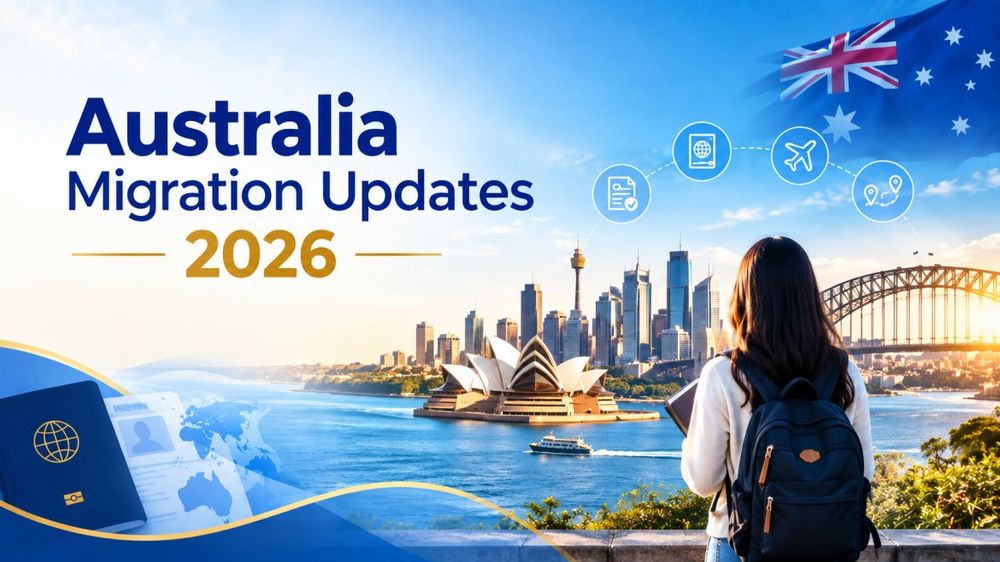
Australia has announced a series of migration reforms to improve visa system management and align migration settings with national skills requirements. The updates affect international students, student dependants, visitor visas, Working Holiday Maker visas, skilled migration priorities, and migration compliance measures. Some changes are already in effect, while others are being progressively implemented. Students and other temporary visa holders should understand which rules currently apply before making migration or study plans. Read the Australian Government's official migration policy updates.
Changes to International Student Dependants
Update: the student dependant changes now apply from 2 October 2026.
The final rules are covered in Australia student visa changes in 2026.
A key change for international students is the restriction on including family members in Student visa (Subclass 500) applications.
Under the new rules, most international students can no longer include their spouse or dependent children in their Student visa application unless they meet an eligible exemption. Family members also cannot be added after the Student visa has been granted.
However, exemptions apply to specific groups, including:
Students undertaking a PhD (doctoral degree).
Students sponsored by the Department of Foreign Affairs and Trade (DFAT) or the Department of Defence.
Students undertaking courses funded by certain foreign government scholarships.
Eligible students who are nationals of specified Pacific Island countries and ASEAN member countries.
These exemptions have specific eligibility requirements. Students from Pacific and ASEAN countries must hold an eligible passport, and the relevant family members must be included when the visa application is lodged.
For the complete eligibility conditions, refer to the Department of Home Affairs' Student visa applicant information and the official Student visa (Subclass 500) requirements.
Students planning to study in Australia with their family members should carefully review the latest dependant visa requirements and consider their financial, academic, and long-term career plans before applying. The final rules, including who can still include dependants, are explained in Australia student visa changes in 2026.
Restrictions on Visa Hopping
The government has introduced measures to address visa hopping, where temporary visa holders move between different visa categories mainly to extend their stay in Australia. See how this fits into the wider picture in Australia PR pathways in 2026.
From 2 October 2026, new rules affect people applying for Student visas while already in Australia. Certain temporary visa holders, including Visitor visa, Working Holiday Maker and Temporary Graduate visa holders, must leave Australia to lodge a Student visa application. They must also be outside Australia when the visa is granted.
The rules also affect existing Student visa holders who want to apply for another Student visa. Most must apply from outside Australia unless they meet a specified exemption. For example, moving to a lower Australian Qualifications Framework (AQF) course level may require an offshore application, while eligible progression to a higher qualification level may allow an onshore application.
The Department of Home Affairs explains these situations through its official Student visa applicant examples.
The federal budget changes are also discussed in Australia Budget 2026 migration changes.
Visitor Visa and "No Further Stay" Conditions
Another announced change involves introducing the "No Further Stay" condition to visitor visas.
This measure aims to reduce situations where visitors enter Australia and subsequently attempt to transition into other visa categories while remaining in the country.
A No Further Stay condition can prevent a visa holder from applying for most temporary and permanent visas while in Australia. It includes conditions such as 8503, 8534 and 8535. However, a waiver may be available in limited circumstances.
The government has announced the intention to extend this condition to all visitor visas as part of its migration policy reforms. This broader measure should be distinguished from the existing No Further Stay conditions already imposed on certain visas.
For details, refer to the Department of Home Affairs' No Further Stay waiver information and its migration policy updates.
Focus on Skilled Occupations
Australia continues to prioritise migration pathways connected with workforce needs. The government has announced changes to skilled visa processing priorities, with attention to sectors including:
Healthcare and nursing
Teaching and education
Construction
Agriculture
Resources and engineering
Law enforcement and defence
Aquaculture and fishing
These sectors are identified in the government's migration policy updates for priority skilled visa processing. However, priority processing does not automatically mean that every occupation in these industries qualifies for a skilled visa.
To check whether your occupation is eligible for a particular skilled migration pathway, refer to the official Australia Skilled Occupation List and the relevant visa requirements.
For international students, choosing a course aligned with Australian workforce demand remains an important part of planning a successful education pathway. For a personal check, use Australia migration support.
Working Holiday Visa Updates
Changes have also been announced for the Working Holiday Maker (WHM) program. These include plans to introduce a ballot system for second and third-year visa arrangements, with a regional work requirement supporting regional Australia.
The government has also announced plans to stabilise Working Holiday Maker visa processing times, with an expected average processing period of around three months.
Existing specified work requirements continue to apply under the current arrangements. Generally, applicants need at least three months of specified work for a second Working Holiday visa and six months for a third visa.
Some categories have different conditions. For example, UK passport holders applying for a second or third Working Holiday visa (Subclass 417) using their UK passport on or after 1 July 2024 do not need to meet the specified work requirement.
For the latest implementation details, refer to the official Working Holiday Maker program updates, specified work requirements, and UK passport holder arrangements.
Stronger Visa Compliance Measures
Australia is also strengthening compliance measures for visa overstayers and individuals who remain in the country without a valid visa.
The government has identified stronger enforcement as part of its migration reform agenda, with measures intended to ensure that people without valid visas leave Australia.
These measures form part of the broader effort to improve migration system integrity and address misuse of temporary visa pathways.
For further information, refer to the Australian Government's official migration policy changes.
Further Updates Expected
The announced reforms indicate the government's direction for managing temporary migration. Some measures are already in effect, while others are being progressively implemented. Further announcements may clarify detailed implementation rules, eligibility criteria, and timelines.
Students planning to apply for an Australia Student Visa in 2026–27 should continue monitoring official updates and seek accurate guidance before deciding on courses, dependants, and future migration pathways.
As one of the best study abroad consultants in Kerala, Hola World tracks these changes for students.
To plan around them, book a free study abroad consultation and speak to our team.
The best Australia education consultants in Kerala can also explain how they affect your course.
Frequently Asked Questions
1. What are the major Australia migration changes in 2026?
Australia's 2026 migration reforms include changes to student dependant eligibility, restrictions on visa hopping, visitor visa conditions, Working Holiday Maker arrangements, skilled migration priorities and visa compliance measures.
2. Can international students bring their spouse or children to Australia in 2026?
Dependant eligibility depends on the student's circumstances and the applicable visa rules. Certain groups, including eligible PhD students and students from Pacific and ASEAN countries, may qualify for exemptions. Applicants should check the latest Department of Home Affairs requirements before applying.
3. Are PhD students exempt from Australia's student dependant restrictions?
Certain PhD students are included in the exemption arrangements. However, eligibility depends on meeting the specific conditions set by the Australian Government.
4. Are students from Pacific and ASEAN countries exempt from the dependant restrictions?
Eligible students from specified Pacific and ASEAN countries may be exempt from the restrictions. Students should confirm whether their nationality and circumstances meet the official eligibility requirements.
5. What is visa hopping in Australia?
Visa hopping refers to moving between different temporary visa categories while in Australia, often to extend a stay. The reforms aim to restrict certain pathways that allow temporary visa holders to move between visa types without meeting the intended requirements.
6. Can international students change to a lower-level course in Australia in 2026?
Some changes to lower-level courses may face additional restrictions under the visa hopping measures. Students should check the applicable course progression and visa requirements before changing their education provider or qualification level.
7. What is the No Further Stay condition on an Australian visitor visa?
The No Further Stay condition prevents visa holders from applying for certain other visas while remaining in Australia. Depending on the condition attached to the visa, the holder may need to leave Australia before applying for another visa.
8. Which occupations are prioritised under Australia's skilled migration system in 2026?
Australia continues to focus on occupations that address workforce shortages, including healthcare, nursing, teaching, construction, agriculture, resources and engineering. Applicants should check the current skilled occupation list and relevant visa requirements.
9. What changes have been made to Australia's Working Holiday Maker visa?
The Working Holiday Maker program has undergone changes involving specified regional work requirements and second- and third-year visa eligibility. Some arrangements differ for UK passport holders, so applicants should check the conditions that apply to their nationality and visa.
10. Where can students check the latest Australia migration rules for 2026?
Students can check official updates through the Australian Department of Home Affairs. They can also seek professional guidance to understand how the changes affect their course selection, dependant eligibility and future migration plans.