Australia Student Visa Rejection Reasons in 2025: Why Indian Students Are Getting Refused and How to Improve Your Chances
23 Jun, 2026
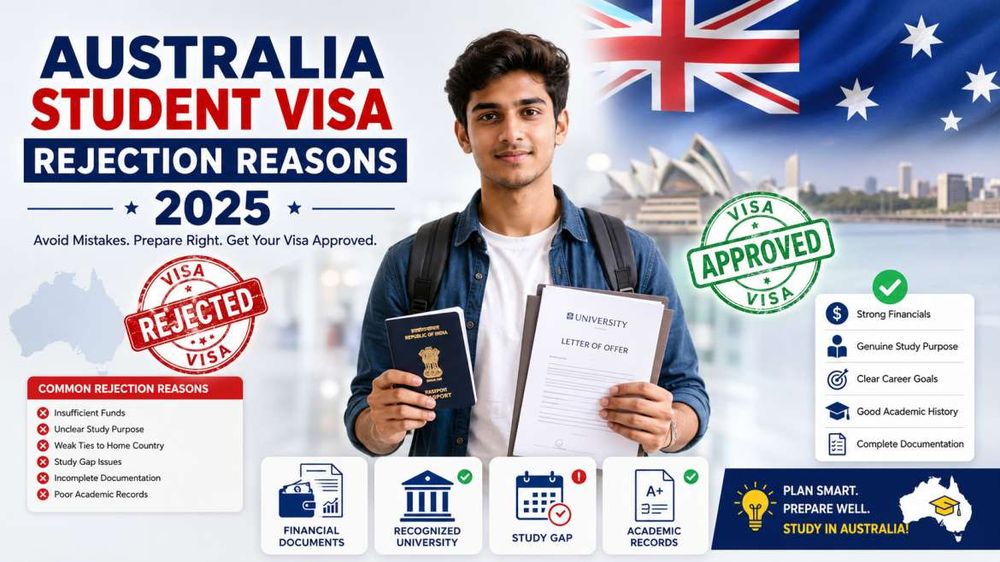
Australia Student Visa Rejection Reasons in 2025: Why Indian Students Are Getting Refused and How to Improve Your Chances
Australia remains one of the most popular study destinations for Indian students. However, in recent months, many students have experienced Australian student visa refusals despite receiving university offers and meeting basic admission requirements.
The Australian student visa process has become more selective, and students must now demonstrate stronger academic performance, financial stability, and genuine study intentions. Based on industry observations and recent visa trends, several common factors are emerging in student visa refusals.
In this article, we explore the most common reasons for Australian student visa rejections, how students can strengthen their applications, and alternative options available if a visa is refused.
Why Are Australian Student Visa Rejections Increasing?
Australia has been tightening its student visa assessment process to ensure that international students are genuine temporary entrants and capable of successfully completing their studies.
Many education consultants believe that modern analytical systems and advanced risk assessment tools are playing a greater role in visa decision-making. As a result, applications with weaknesses in academics, finances, study history, or genuine student criteria are being scrutinised more closely than before.
While genuine students still have strong opportunities to study in Australia, not every application is being approved.
1. Study Gaps Are Becoming a Major Risk Factor
One of the most common reasons for student visa refusal is an extended study gap.
Students who complete their higher secondary education and wait one year or longer before applying for Australia are facing increased scrutiny. This is especially noticeable among bachelor’s degree applicants, particularly nursing students.
A study gap may be considered acceptable if properly explained. However, recent visa trends suggest that even explainable gaps can increase the risk of refusal.
Why Does a Study Gap Matter?
When students delay their studies, visa officers may question:
- Why did the student not continue their education immediately?
- Whether the student genuinely intends to study.
- Whether financial or academic eligibility issues prevented earlier enrollment.
For students completing Grade 12, applying for the immediate intake after graduation is generally considered the safest approach.
2. Low Academic Scores Can Affect Visa Approval
Academic performance continues to play an important role in visa assessment.
Students with marks below 65% appear to face a higher risk of refusal than those with stronger academic records.
While there is no official minimum percentage that guarantees approval, stronger academic performance helps demonstrate the student’s ability to succeed in an Australian education environment.
Recommended Academic Profile
- An academic score above 65% is generally safer.
- Consistent academic history strengthens the application.
- Strong supporting documents and SOPs become even more important for students with lower marks.
3. Excessive Backlogs May Increase Refusal Risk
Backlogs remain another significant concern.
Students with a large number of backlogs often face greater challenges in obtaining student visa approval. Profiles with more than 10 backlogs may attract additional scrutiny.
Backlogs alone do not automatically result in refusal, but they can raise concerns about academic capability and course progression.
Students with fewer backlogs and a strong academic recovery often have better outcomes.
4. Financial Strength Is More Important Than Ever
Financial documentation is one of the most critical components of an Australian student visa application.
Students must prove they have sufficient funds to cover:
- Tuition fees
- Living expenses
- Travel expenses
- Other study-related costs
Recommended Financial Capacity
Based on current trends, many consultants consider the following financial profile safer:
- Total available funds: Approximately ₹50 lakh or more
- Stable and verifiable financial documents
- Clear source of funds
While some students may receive approvals with lower financial capacity, stronger financial evidence generally reduces risk.
5. Sponsor Income Plays a Crucial Role
In addition to total funds, sponsor income is becoming increasingly important.
A sponsor’s income should clearly demonstrate the ability to support the student’s education in Australia.
Ideal Sponsor Profile
- Primary sponsor income above ₹8 lakh annually
- Combined family income of around ₹15 lakh or higher
- Stable employment or business history
- Proper income tax returns and supporting financial documents
Students with stronger sponsor profiles generally have a better chance of meeting financial assessment requirements.
6. University Selection Can Influence Outcomes
Although university rankings alone do not determine visa approval, students attending higher-ranked institutions often experience higher visa success rates.
Universities within globally recognized ranking systems tend to attract students with stronger academic and financial profiles, which may contribute to better outcomes.
Choosing the Right University
Students should consider:
- University reputation
- Course relevance
- Career outcomes
- Genuine academic progression
Choosing a university solely because of lower entry requirements may not always be the best strategy.
Bachelor’s Students vs Master’s Students
Recent observations suggest that master’s applicants often experience better visa outcomes than bachelor’s applicants.
Master’s Students
Master’s applicants generally benefit from:
- Previous academic qualifications
- Professional experience
- Clear career progression
- Stronger justification for study plans
Bachelor’s Students
Bachelor’s applicants, particularly those with study gaps, lower academic scores, or weak financial profiles, may face greater challenges during visa assessment.
What Happens If Your Australia Student Visa Is Refused?
A visa refusal does not necessarily mean the end of your international education journey.
Students should first understand the specific reasons for refusal and determine whether:
- A reapplication is possible.
- Additional documentation can address concerns.
- An alternative study destination may be more suitable.
In some cases, reapplying with stronger supporting evidence can result in a successful outcome.
Alternative Study Destinations for Students
Students who receive Australian visa refusals may consider other high-quality study destinations.
United Kingdom
The UK remains one of the most popular alternatives, especially for nursing students.
Benefits include:
- Strong visa success rates
- Globally recognised qualifications
- Graduate work opportunities
Ireland
Ireland offers excellent education, strong employment prospects, and growing opportunities for international graduates.
Netherlands
The Netherlands has become increasingly attractive for international students due to its high-quality education system and English-taught programs.
New Zealand
New Zealand provides another pathway for students seeking quality education and potential future migration opportunities.
How to Improve Your Australia Student Visa Success Rate
Students can significantly improve their chances by focusing on the following:
Avoid Long Study Gaps
Apply as close as possible to your previous qualification.
Maintain Strong Academics
Aim for academic scores above 65% whenever possible.
Strengthen Financial Documentation
Provide clear, genuine, and verifiable financial evidence.
Choose the Right Course
Ensure the selected course aligns with your academic background and career goals.
Prepare a Strong, Genuine Student Statement
Clearly explain why you chose Australia, the course, and your future plans.
Work With Experienced Professionals
Proper guidance can help identify risks before submitting an application.
Final Thoughts
Australia continues to welcome genuine international students, but the student visa process has become increasingly selective. Strong academics, financial stability, minimal study gaps, and a well-structured application are more important than ever.
Students who meet the required standards still have excellent opportunities to study in Australia. However, understanding the current visa trends and preparing accordingly can significantly improve the chances of success.
If your profile contains potential risk factors, it is advisable to seek professional guidance before proceeding with your application. Careful planning today can help prevent costly delays and visa refusals tomorrow.